The Future of Pacific Northwest Reforestation

Building a Strategy for the Decades Ahead


The forests of the Pacific Northwest are burning up — faster than we can regrow them. Discover the scale of the reforestation challenge and what it will take to keep pace over the next 50 years.

SCROLL TO READ

i Image: Jason Houston / American Forests

Forest loss from wildfire in the Pacific Northwest is outpacing our ability to replant — and the gap continues to widen.

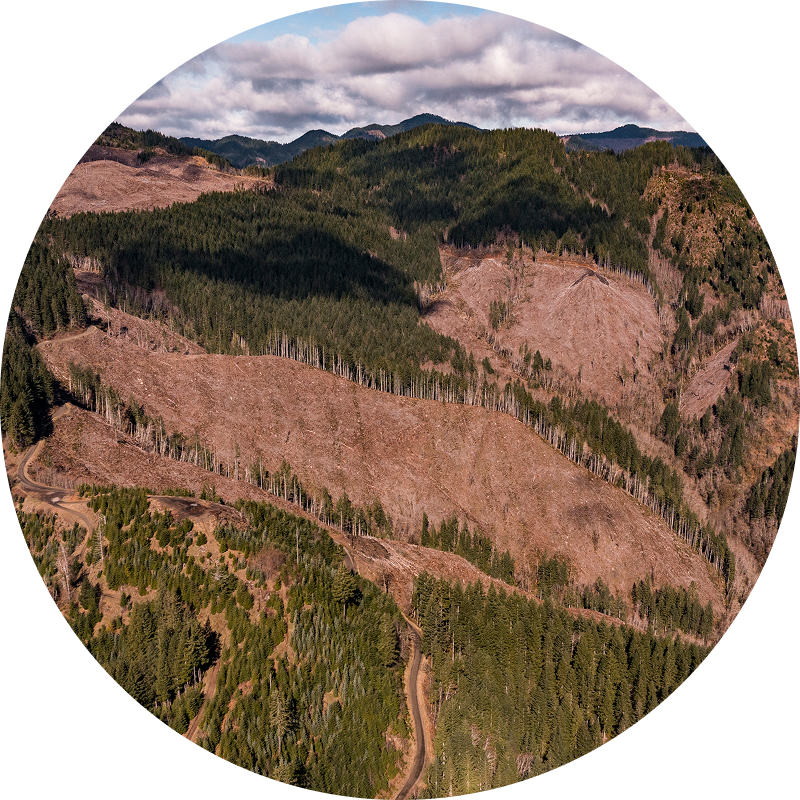
Across Washington and Oregon, forested areas are constantly in flux. Disturbance from land conversion, harvest and wildfire often require active reforestation to ensure forests can regrow. But as wildfire-driven forest loss skyrockets, we now must rapidly scale up coordination and funding, and develop long-term strategies to meet the growing need for reforestation.

Background image: Jason Houston / American Forests.

"We have a lot of work in redefining reforestation in the new climate. How do we prioritize where we put our investment? That's key."
-Reforestation Service Provider

Background and inset image: Jason Houston / American Forests.

American Forests conducted a first-of-its-kind analysis to forecast the scale of reforestation need across the Pacific Northwest — now, and over the next 50 years.

Planning based on the true scale of need is essential for developing long-term strategies that can attract the funding, contracts and resources needed to support sustainable growth across the reforestation industry. Without reliable investment and long-term commitments, scaling up isn't just difficult — it's financially risky.

To understand where we stand now, we looked at today's reforestation need from timber harvest and wildfire — two very different drivers.

Timber harvest creates a steady, predictable demand. Wildfire, on the other hand, is highly unpredictable, making it virtually impossible for reforestation industries to plan at scale.
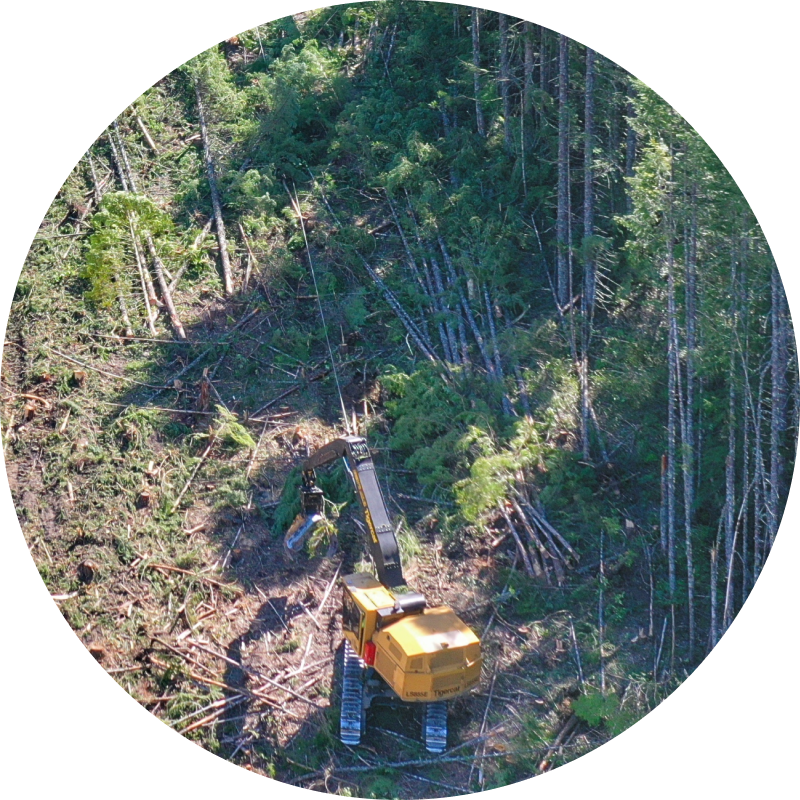
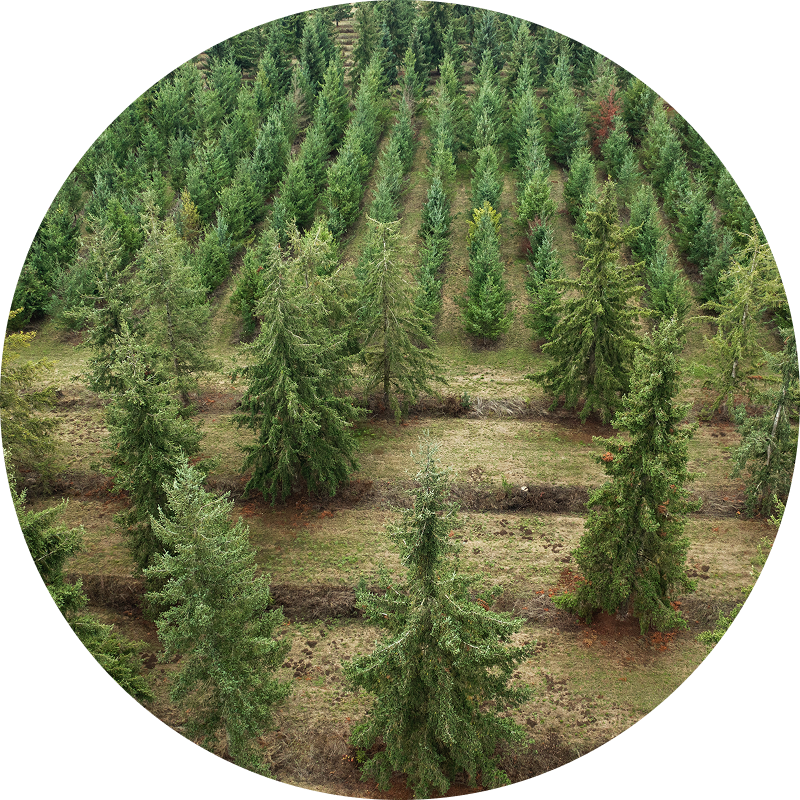
State law requires landowners to replant within two years of a harvest, and to ensure that by year six, the new trees are "free-to-grow" — healthy, well-spaced and capable of developing into a thriving young forest.
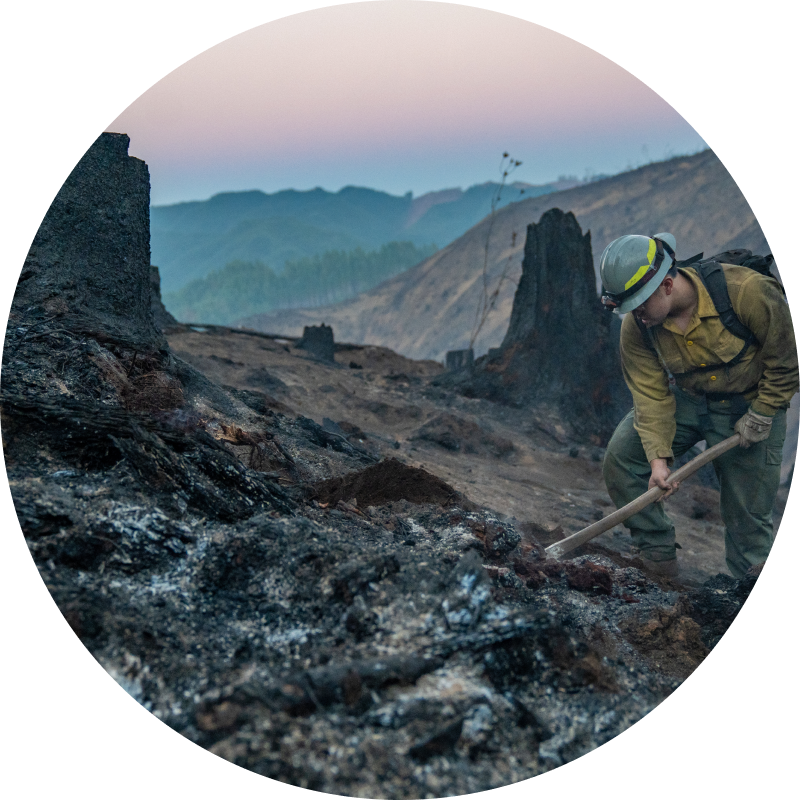
In areas where wildfires have killed more than 75% of live tree cover and surviving mature trees are too far to disperse seed, landscapes need support through active planting to return to forests.

Image left: Brian Morris / American Forests; Image right: Marcus Kauffman, Oregon Dept. of Forestry.

Timber Harvest-Driven Reforestation

Reforestation is already a standard part of sustainable timber harvesting practices. Timber harvests support over 171,000 jobs and $6.7 billion in wages annually. But each regeneration harvest triggers the need to replant, and that demand ties up much of our current reforestation industry. West of the crest of the Cascades,* this accounts for the bulk of current reforestation need.

*Map regions are delineated based on seed zones and the Cascade Divide.

Wildfire-Driven Reforestation

Meanwhile, high-severity wildfires are reshaping forests across Eastern Washington and Oregon, leaving behind large areas that won't recover on their own. These wildfire-impacted lands are expanding, often in more ecologically sensitive areas, and putting immense pressure on seedling demand.

*Map regions are delineated based on seed zones and the Cascade Divide.

Our Reforestation Baseline

Bringing these two drivers together, timber harvest and fire, gives us a clearer view of today's baseline and a foundation for future projections. Between 2014 and 2023, there were 1.275 million acres of timberland where replanting may be already underway or planned and 817,289 acres that were cleared by high severity wildfire.

*Map regions are delineated based on seed zones and the Cascade Divide.

Wildfire is the wild card

It's unpredictable, fast-moving, and burns are growing larger and more severe with each passing year. It's already taxing our capacity to respond.

Inset image: Andrew Studer / American Forests.

"It's tough to run a business in reforestation because it's so unpredictable."
-Reforestation Service Provider

Background image: Jason Houston / American Forests; Inset image: Andrew Studer / American Forests.

A Prioritization System for Wildfire Reforestation

To help focus wildfire restoration efforts, we used geospatial techniques to classify areas as high or low priority based on how challenging it is for forest types to grow back naturally within their environmental conditions.

High priority areas are dry or moist vegetation groups growing in areas with high heat load and radiation — conditions that make natural forest regeneration more difficult.
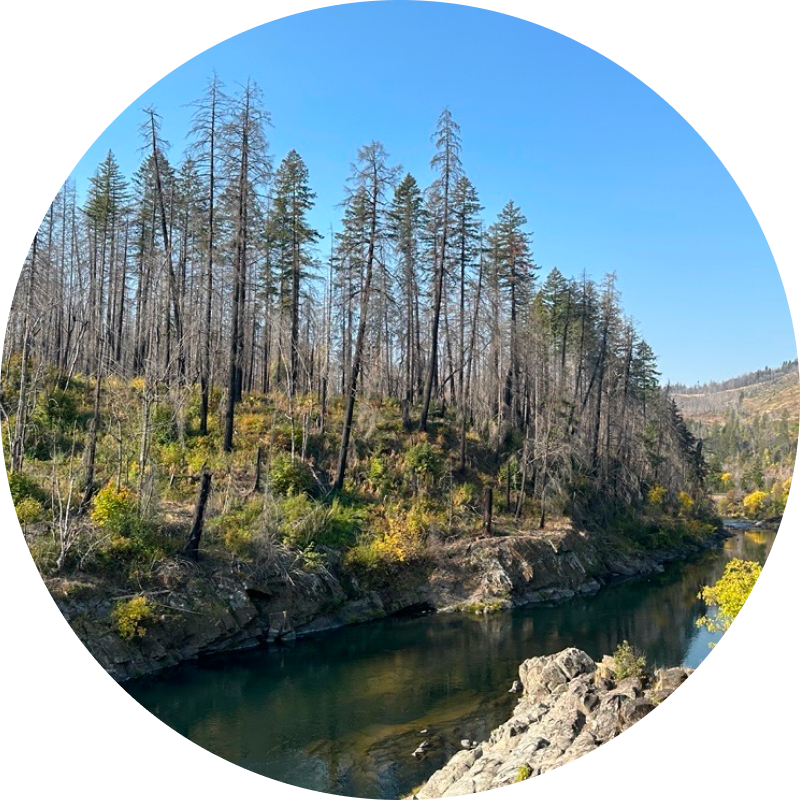
Low priority areas are cool or moist vegetation groups growing in areas with neutral or cool heat load, where natural regeneration is more likely to succeed without intervention.

Image left: Jason Houston / American Forests; Image right: Gwyn Myer / American Forests.

Current Wildfire Reforestation Need

Interact with the dropdown menus to explore high and low priority restoration need by species and land ownership in each region.

In total, the analysis identified roughly 407,000 high priority acres for reforestation — broken down by forest type. High priority areas are the most at risk of regeneration failure, with a higher need of human intervention in order to reforest.

Today's Seed Need

Hover to see reforestation need and seed need by species.

Even today's wildfire-driven demand exceeds current seed supply. Most seedling production focuses on regions and species important for timber harvest (e.g., Douglas-fir in areas west of the Cascades, and Ponderosa Pine in Northeast Washington), leaving gaps across other regions and forest types.

"Expansion may be possible but only with adequate assurances and support."
-Nursery Provider

Background and inset image: Brian Morris / American Forests.

Next, we modeled how reforestation needs1 could evolve over the next five decades, under two key assumptions:

  • Wildfires increase in frequency and severity, consistent with climate forecasts (Anderegg et al. 2022).
  • We can use 2014 to 2023 high severity wildfire activity as a baseline, then apply multipliers based on future fire probability to estimate how burned areas may expand in the next 50 years.

Our models estimate how many acres, and which forest types, will need reforestation through 2069.

1Future projections exclude timber harvest, assuming it will remain steady under current policies.

Background image: Marcus Kauffman, Oregon Dept. of Forestry.

Substantial Increases are Projected for Wildfire Reforestation Acreage and Seed Need

Between 2060 and 2069, most regions in the Pacific Northwest, other than Western Washington, will see a projected increases in wildfire reforestation need of around 500% compared to the past decade. The surge is projected to be strongest in Eastern Washington forests. Similar trends are projected for seed need, especially for ponderosa pine in Eastern Oregon.

You can toggle between the projected reforestation acreage and pounds of seed needed to counter increased wildfire activity in the figure below.

< script src="https://public.flourish.studio/resources/embed.js">

Explore Future Reforestation Demand by Forest Type in Each Region

Choose a region to view projections of wildfire-driven reforestation need across all forest types. Select a specific forest type to see how its reforestation need is expected to grow.

Millions of Acres, A Growing Need for Seed

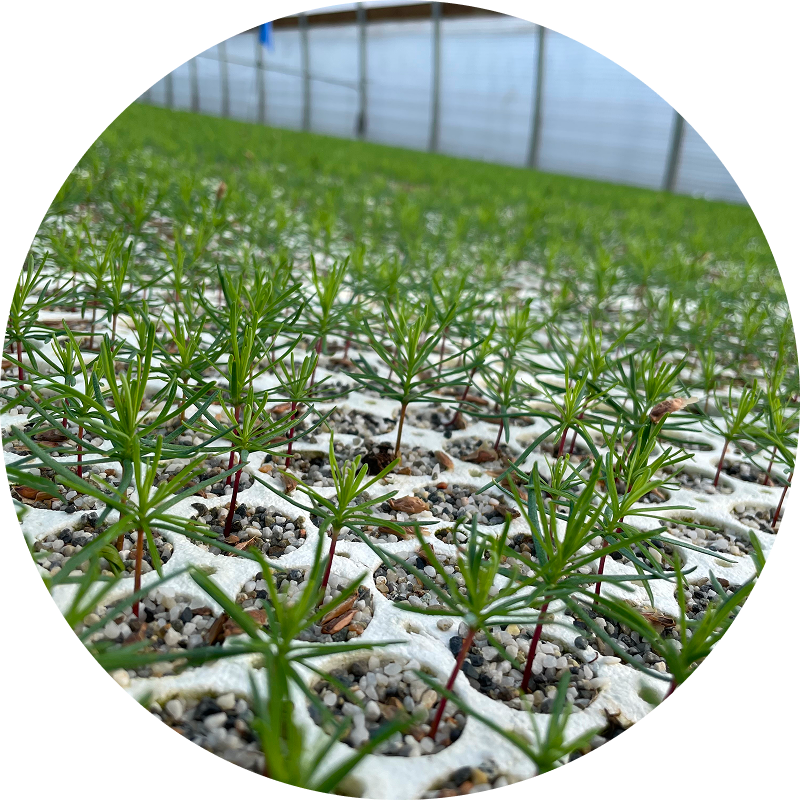
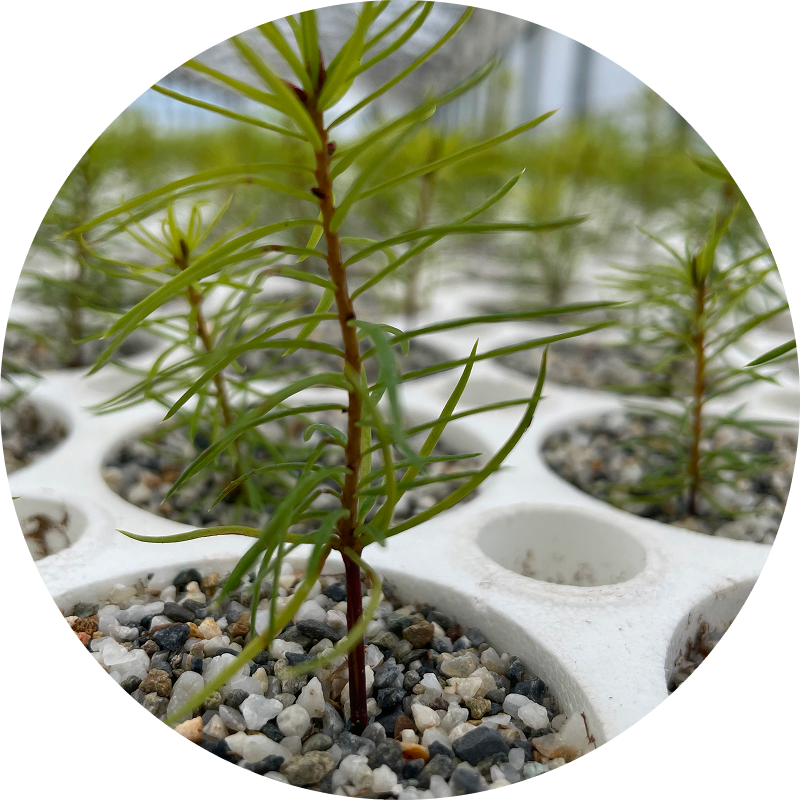
We'll need more species diversity, more seeds collected from across a wider range of elevations and geographies, and more nursery space to grow seedlings in time for planting. How will we do it?

Background image: Brian Morris / American Forests.

"There needs to be a strategy. A plan. Start to finish.... I need to have consistency and commitment for the work in advance."
-Reforestation Service Provider

Background and inset image: Brian Morris / American Forests.

What Will it Take to Scale Up Reforestation?

Meeting future reforestation demand in the Pacific Northwest won't happen overnight — it requires careful planning and strategic action. We asked nursery owners, land managers and reforestation service providers to weigh in about what's needed to rise to the challenge.

We need strong partnerships and centralized information to align efforts across agencies, organizations and regions and streamline processes and communications.

We need long-term, coordinated statewide and regional strategies grounded in analyses like this one that quantify future demand and provide wildfire response plans for deploying resources.

We need policy support and reforms such as modifying the H-2B visa program, unlocking consistent funding for workforce and driving implementation at scale with long-term commitments.

We need reliable funding mechanisms and streamlined contracts that incentivize reforestation, simplify processes and reduce financial risk as service providers expand capacity.

Background image: Andrew Studer / American Forests.

This is an all-hands-on-deck moment. With smart planning and coordinated effort, we can restore the forests of the Pacific Northwest and ensure they are ready for the future.

Background image: Andrew Studer / American Forests.

Find more information

Read the full Reforestation Needs Assessment Reports and delve into our discussions with reforestation service providers:

PNW Reforestation Network Kick Off convened by American Forests and Sustainable Northwest (Funded by WA DNR) on June 3rd, 2025:

Catch up on the Reforestation Summit convened by American Forests in January 2025:

Talk to an American Forests expert

Background and inset image: Andrew Studer / American Forests.

The Current and Projected Reforestation Need Assessments for Washington and Oregon State were prepared by Charles Truettner Ph.D., Ryan McCarley, Kenneth Davidson Ph.D., Elizabeth Pansing Ph.D., Kendall DeLyser, Gwyn Myer, Brian Morris Ph.D.

Story and visualization by Julia Twichell.

2025 American Forests. All Rights Reserved.